People think vampires disappeared, which is understandable, because it would be comforting to believe that certain problems simply resolve themselves if ignored long enough, the way millions of straphangers pretend there isn’t a profoundly unpleasant odor unfolding two feet away on the subway.
But vampires didn’t disappear, they integrated, which is what everyone does eventually when pitchforks are replaced by committees and torches by task forces, when the Industrial Revolution arrives and insists that even eternal darkness show up on time, check in at the main kiosk, or in the app, and fill out an insurance form. Integration is always sold as progress, which usually means paperwork, onboarding videos, and a careful replacement of old language with newer, safer terms, so that a curse becomes a condition, feeding becomes access, hunting becomes non-consensual intake, and eternal becomes long-term, subject to revision, clarification, or sensitivity review.
Immortality in 2026 isn’t about secrecy or mystique or cloaks, it’s about compliance, about learning which questions to answer and which ones to smile through, about understanding that explaining yourself, even accurately, is almost always a mistake. You don’t notice vampires anymore because you’re not supposed to, that’s the agreement, besides, it would be rude to speak of the undead in mixed company, and no one wants to be rude, especially not about something that has already agreed to keep a low profile and stay up to date on its trainings.
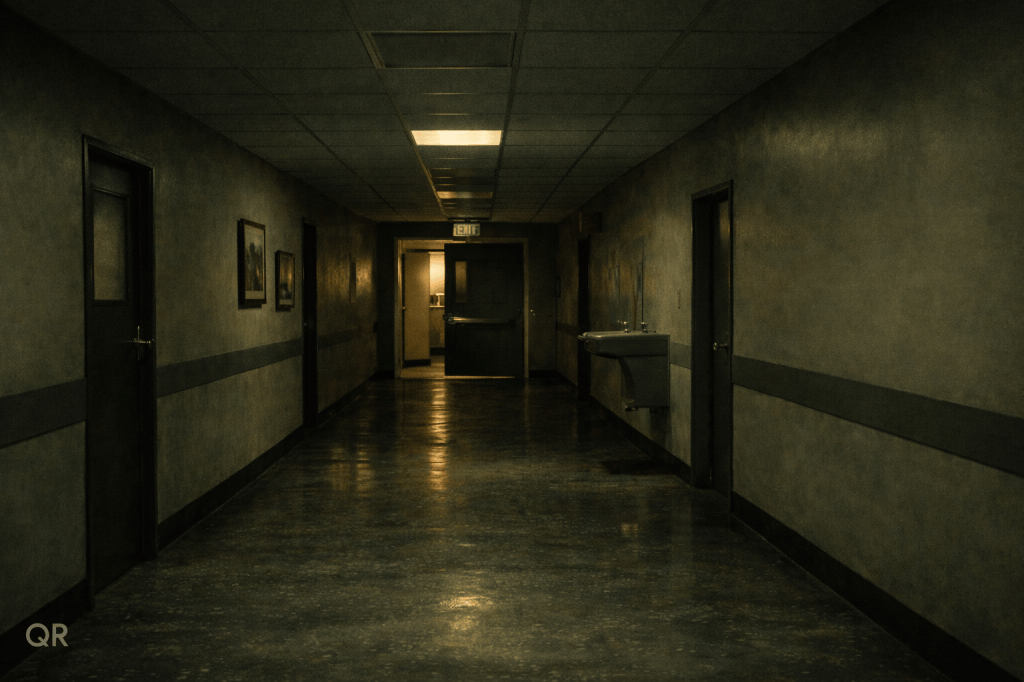
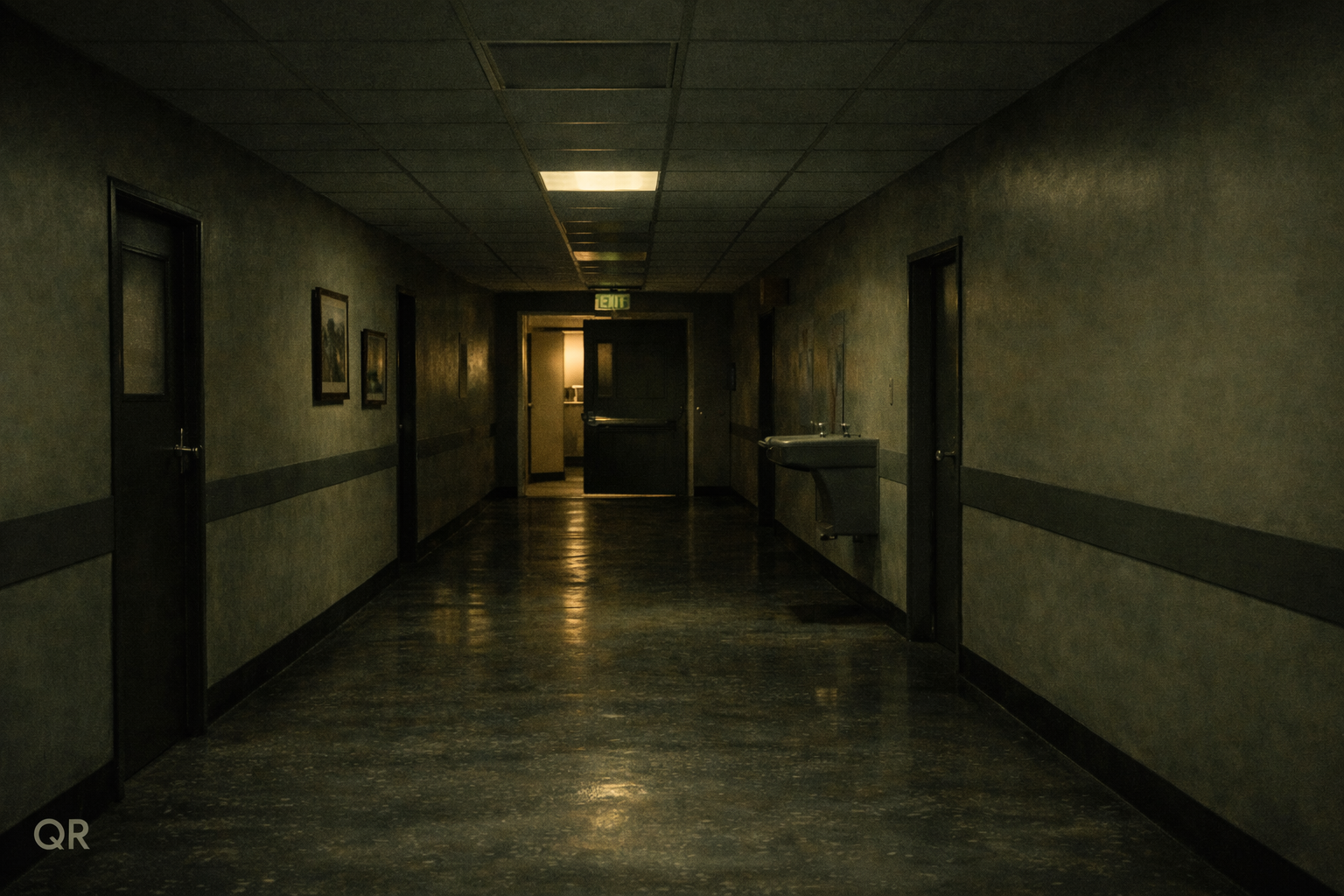
Which is why the modern vampire workforce has clustered almost entirely around overnight labor, not because they prefer it, but because it was available. The graveyard shift, as it’s still called, persists largely out of tradition and partly because no one has yet proposed a rebrand that wouldn’t require another meeting or trigger yet another march. Hospitals figured this out early, because hospitals are already designed to absorb the strange without comment; after all, people arrive bleeding, panicked, delirious, speaking in fragments, and at three in the morning everyone looks a little undead anyway.
Blood is already there, labeled, logged, screened, counted, color-coded, refrigerated, audited, and discussed only in appropriate contexts; there are systems in place, protocols, consent forms thick enough to bury a body in, and for vampires this wasn’t a moral awakening so much as an efficiency upgrade, the difference between hunting and inventory.
The labor market forced the issue. You can’t just haunt villages or linger in alleyways or feed casually anymore, there are cameras everywhere, citizen apps, neighborhood groups, Ring footage, and standing still for too long now qualifies as suspicious behavior, brooding included. So vampires did what everyone does when their entire way of life becomes economically unviable, they took whatever jobs were left, night nurse, ER intake, phlebotomist, lab tech, blood bank inventory, positions that came with access and silence, and some of them even work in graveyards, where families have reported bodies missing fingers, teeth, or the occasional pinky ring, an issue officials have determined does not meet the threshold for further review.
They don’t call this survival; they call it adaptability.
They’re very good at the work, unnaturally calm during emergencies, unshakable during codes, finding veins without hesitation, speaking softly to people who are afraid and powerless, a bedside manner honed over centuries and now listed under core competencies. The older vampires struggle more, the ones who remember castles, who ruled briefly before fear was replaced by metrics, they resent being evaluated, they resent having supervisors younger than their own bloodlines, and they do not understand why authority now requires tone.
I once commanded an entire region, one of them says, adjusting his badge.
And now you command inventory, another replies.
Human Resources is where immortality finally encounters something it cannot outlast. The onboarding videos are careful, featuring smiling actors explaining expectations and preferred language, and it’s here that vampires learn that describing blood as rich, robust, or a good year is no longer appropriate, even nostalgically. They are encouraged to use neutral descriptors. Referring to coworkers or patients as livestock is discouraged. Garlic jokes are discouraged as well, though not formally banned, which creates confusion. Stakes are prohibited outright. Capes are technically allowed but not encouraged.
There are accommodations, of course, sunlight sensitivity clauses, spiritual exemptions, policies designed to acknowledge everyone while committing to nothing. Vampires are reassured repeatedly that they belong, provided they continue to demonstrate belonging in measurable ways.
There is also the story, which administration insists is unverified, about a nurse who picked up a double shift, then another, forgot briefly that the sun had come up, exited through the employee doors thinking only about sleep and the comfort of her coffin, and disintegrated halfway across the parking lot, an incident later attributed to fatigue and environmental factors, followed by updated signage near the exits and a reminder email encouraging staff to remain aware of changing light conditions when clocking out.
Whether it was only a rumor seemed not to matter, as dozens of night denizens quietly submitted transfer requests to facilities closer to the north pole, where it stayed dark for months on end and they could finally relax a bit, and catch a reduced-price matinee for the first time.
There is also the story, less frequently repeated, about a nurse who volunteered extra coverage in the dual-diagnosis ward, a practice later discouraged after two patients were reported missing during the same overnight shift, an outcome attributed to staffing shortages and documentation errors. The beds were reassigned quickly. The census numbers balanced out.
Feeding is regulated now, though nobody calls it feeding, it’s access and quality control, and there was a brief phase involving substitutes, animals, rodents, which didn’t last because rats were inefficient. What replaced it wasn’t indulgence but optimization.
Blood is drawn according to protocol, tubes filled in sequence, labels verified, three required, one additional tube sometimes collected to ensure accuracy, documentation reflecting the required amount. Intake is brief and controlled, comparable to a shot taken standing in a supply room between tasks, enough to remain functional, enough to work another shift.
I’m cutting back.
I only do it on doubles.
I need it to focus.
The younger vampires don’t understand the resentment, they were trained this way, credentialed this way, they learned charting software before they learned hunting, and they speak fluent policy. They’re also highly ambitious, as immortality gives you patience and patience looks like leadership potential.
Occasionally a patient notices something, the stillness, the eye contact, the way the nurse never seems rushed at four in the morning, for a moment there’s a flicker of fear, then the IV drip hums, the meds kick in, and the fear becomes embarrassment, the patient apologizes.
Which is how the system prefers it.
Vampires do not vote in large numbers. They rarely complain. They accept conditions others decline. They are praised for their work ethic and questioned for their presence, described as essential and discussed as provisional in the same breath.
No one calls this exploitation. Everyone calls it opportunity.
An internal memo circulated last year reminding staff that extended visibility, clustering, or collective expressions of concern may create discomfort among patients and should be avoided in patient-facing environments.
The truth is vampires didn’t lose their power, they traded it for stability, for benefits, for health insurance, and a 401k plan that assumes an endpoint no one asks about. Immortality wasn’t the curse. Being endlessly useful was.
When the sun comes up and the day shift arrives, loud and cheerful and already exhausted in a different way, the vampires clock out, they don’t linger, they don’t socialize, they’re good at leaving, and a hundred years from now the blood will be where the people are, the people will be where the housing is, and the housing will be wherever the system decides it is most efficient.
We’re sorry. Your claim has been denied.


Leave a Reply